NewsOpinion

What South Africa Can Learn from the Recent Air India Flight 171 Crash

What We Know About the Plane Crash in Ahmedabad, India

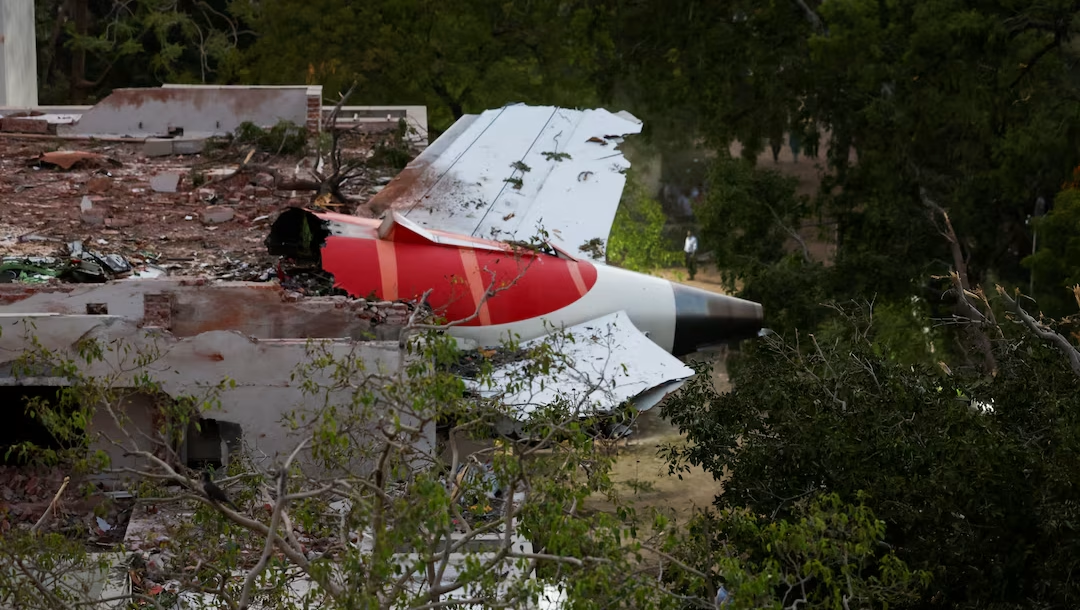
The recent tragedy of Air India Flight 171, a Boeing 787-8 Dreamliner that crashed shortly after takeoff from Ahmedabad, India, on June 12, 2025, has sent shockwaves through the global aviation community. With over 230 lives lost and only one survivor, this disaster marks the worst aviation accident in a decade and the first fatal crash involving the otherwise reliable Boeing 787 Dreamliner. As South Africa’s aviation sector continues to grow, this catastrophe offers critical lessons to strengthen safety protocols, improve regulatory oversight, and ensure such a tragedy is never repeated on our soil. Here’s what South Africa can learn from the Air India crash to bolster its aviation safety framework.
1. Prioritize Proactive Maintenance and Configuration Checks

Preliminary reports suggest that Flight 171 may have suffered from improper aircraft configuration during takeoff. Experts noted that the plane’s landing gear was down, and its wing flaps appeared retracted—both unusual for a plane climbing out of the airport. This raises questions about pre-flight checks and maintenance procedures.

Lesson for South Africa: South African airlines and the South African Civil Aviation Authority (SACAA) must enforce rigorous pre-flight inspection protocols. Ensuring that aircraft are correctly configured for takeoff, with all systems—flaps, slats, and landing gear—verified, is non-negotiable. Regular audits of maintenance practices, especially for modern aircraft like the Boeing 787, can prevent human errors or mechanical oversights. The SACAA could adopt advanced digital checklists or automated monitoring systems to catch configuration errors before they become deadly.

2. Strengthen Pilot Training and Emergency Response

The Air India crash occurred just seconds after takeoff, with the plane issuing a “mayday” call before losing contact. The pilots had little time to react, suggesting that low-altitude emergencies may have overwhelmed them. Experts speculate that a bird strike, pilot error, or a flap misconfiguration could have contributed, highlighting the importance of pilot readiness for critical flight phases.

Lesson for South Africa: South Africa’s aviation training programs should emphasize low-altitude emergency scenarios, such as engine failures, bird strikes, or configuration issues, in simulator training. Pilots must be drilled on rapid decision-making during takeoff and landing, the most vulnerable phases of flight. Additionally, airlines like South African Airways and Comair should invest in crew resource management (CRM) training to improve communication and coordination in high-stress situations. The SACAA could also collaborate with international bodies like the International Civil Aviation Organization (ICAO) to align training standards with global best practices.


3. Enhance Regulatory Oversight and Enforcement

India’s aviation sector has faced criticism for inconsistent enforcement of safety regulations, despite improvements in its ICAO safety ranking (48th globally in 2022). A 2019 ICAO audit flagged issues with India’s air traffic services and regulatory oversight, which may have contributed to systemic vulnerabilities exposed by the crash.

Lesson for South Africa: The SACAA must maintain a proactive, rather than reactive, approach to safety oversight. Regular, unannounced audits of airlines, airports, and maintenance facilities can identify gaps before they lead to disasters. South Africa should also ensure that its air traffic control systems are equipped to handle growing air traffic volumes, especially at busy hubs like OR Tambo International Airport. Learning from India’s challenges, the SACAA could establish a dedicated aviation safety oversight board to monitor compliance and enforce corrective measures swiftly.

4. Mitigate Risks at High-Risk Airports

The Air India crash occurred near Ahmedabad’s Sardar Vallabhbhai Patel International Airport, where bird strikes are a known hazard. India’s history of crashes at airports with challenging topographies, like Mangalore and Kozhikode, underscores the need for robust risk management at vulnerable sites.

Lesson for South Africa: South African airports, particularly those in urban or coastal areas like Cape Town International or King Shaka International, must assess and mitigate environmental risks such as bird activity or challenging terrain. Implementing advanced bird control measures—such as radar systems, sonic deterrents, or habitat management—can reduce the likelihood of bird strikes. Additionally, airports should conduct regular safety drills to prepare for crashes in nearby residential areas, ensuring rapid coordination with emergency services.

5. Learn from Black Box Data and Investigations

The investigation into Flight 171, led by India’s Aircraft Accident Investigation Bureau with support from the U.S. National Transportation Safety Board and the UK’s Air Accidents Investigation Branch, will rely heavily on the plane’s black box data to uncover the cause. Past crashes, like the 1999 LAPA Flight 3142 in Argentina, revealed critical lessons about flap misconfigurations that led to global improvements in pilot training.

Lesson for South Africa: South Africa must commit to thorough, transparent crash investigations and implement findings promptly. The SACAA should ensure that all commercial aircraft are equipped with modern flight data recorders and cockpit voice recorders, and that data is analyzed swiftly to inform safety reforms. Establishing a national database of incident reports, accessible to airlines and regulators, could help identify patterns and prevent future accidents.

6. Address Public Trust and Industry Accountability

The Air India crash has reignited public concerns about Boeing’s safety record, particularly after whistleblower allegations about 787 Dreamliner assembly defects. Boeing’s leadership has faced scrutiny for prioritizing production over safety, a perception that could erode trust in aviation globally.

Lesson for South Africa: South African airlines and regulators must prioritize transparency to maintain public confidence. In the event of an incident, clear communication about the cause, investigation, and corrective actions is essential. The SACAA should also hold manufacturers like Boeing and Airbus accountable for addressing safety concerns promptly. Engaging with passenger advocacy groups and the media can help rebuild trust and demonstrate a commitment to safety.

A Call to Action for South Africa

The Air India Flight 171 crash is a sobering reminder that even modern aircraft, operated by established airlines, are not immune to failure when systemic issues—maintenance lapses, pilot error, or regulatory gaps—go unaddressed. South Africa, as a key aviation hub in Africa, has an opportunity to learn from this tragedy and strengthen its safety framework. By investing in robust maintenance, pilot training, regulatory enforcement, and risk management, the SACAA and South African airlines can ensure that passengers board their flights with confidence.


As the global aviation community awaits the findings of the Flight 171 investigation, South Africa must act now to prevent such a disaster from occurring on its soil. The skies are safer when lessons are learned and applied—let’s make sure we heed them.
Tags
Show More
Close