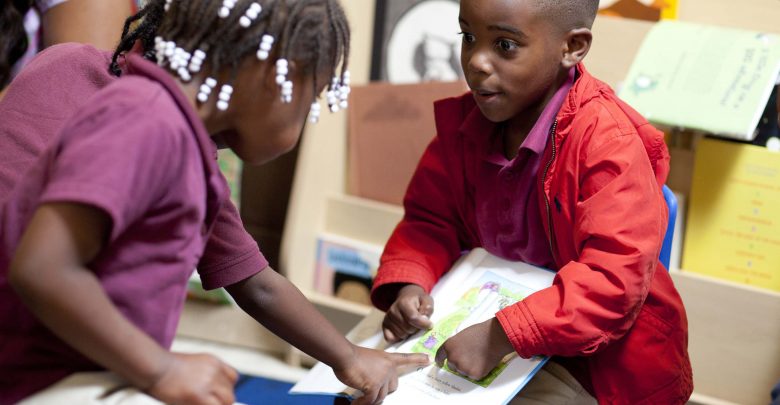
After years of complications with the delivery of textbooks to Limpopo’s public schools, it seems this year the Department of Education in the province has finally broken the ‘textbook curse’.
Visits to schools on the first day of the 2018 academic year by various stakeholders revealed an improvement in
the supply of textbooks and other learner teacher support material.
The ‘Limpopo textbook crisis’ can be traced back to the year 2011 when the department was under the leadership of
former MEC Dickson Masemola and was marred with allegations of corruption, mismanagement and maladministration.
A week hardly went by without textbooks getting shredded, dumped into rivers and open velds, leaving thousands
of learners across the province without learning material.
On May 4, 2012, Non-Government Organisation (NGO) and civil rights group Section27 first launched an urgent
application to compel the government to deliver textbooks for grades R, one, two, three and 10 to schools in Limpopo.
Delivering a seminal judgment on May 15, 2012, Judge Jody Kollapen ordered that the textbooks get delivered to all schools in the province by no later than June 15 of the same year.
He also declared that textbooks are an “essential component” of the right to basic education and, accordingly, the failure to deliver textbooks to schools in Limpopo was a violation of this right.
Even after Judge Kollapen’s ruling, textbook shortages in Limpopo continued but improved over the years.
Last year the department also came under fire from the Democratic Alliance(DA) in the province which after
visiting some schools in the Waterberg, Mopani and Sekhukhune districts, reported textbook shortages at the start of
the academic year.
However, the department at the time said the problem was caused by a failing retrieval system and schools that fail to order top-up textbooks in time.
Towards the end of 2017 the department ensured that it pulls all stops to try and avoid shortages for this year by
roping in stakeholders including teacher union, the South African Democratic Teachers’ union (SADTU), suppliers and
publishers in planning for this academic year.
In October 2017, Pride News paid a visit to the department’s warehouse in Seshego, outside Polokwane, where the
textbooks are stored.
It was work in progress, as officials appeared hard at work loading books into trucks to deliver around the province chasing a 2, November 2017 deadline.
Limpopo’s Education spokesperson Sam Makondo told Pride News at the time, that 3 600 schools across Limpopo
had placed their orders.
But, the 2018 academic year has not been without drama as the DA released a statement on the first day of school,
alleging that over 200 schools across the province were without textbooks.
However, Makondo says the DA misunderstood the department’s statement in which it confirmed that only
3600 out the 3822 schools had placed their orders for top-up textbooks and that the remaining 222 did not have to place any orders because they had done a good job in retrieving textbooks from learners.
Makondo says another factor that could’ve caused the schools not to order books, could be that learner enrolment
had declined and perhaps there was no need to order more books.
“The DA missed the point completely, this is not the year for supplying books from scratch, we are only adding to
what schools have and as needed,” says Makondo.
Adding that the delivery of textbooks depends on information provided by the schools, which includes a numbers of books needed, subjects, publishers and languages. Explaining that when information is inaccurate, delivery is
compromised.
SADTU’s Acting Provincial Secretary Sowell Tjebane told Pride News that this year has indeed seen improvement.
“Because we had a rough start to 2017, we impressed upon the department throughout the year that we should implement risk management strategies to try and eliminate possible risks.”
He says the union kept up to date with the department throughout 2017 about procurement processes, “Meetings took
place, the last one we had was on the 12th of December 2017, where we were briefed about what to expect, the progress that had been made and we were impressed,’’ adds Tjebane.
He further explains that they expected about 200 schools that could not go on the order that was issued at that time. “The department even outlined a contingency plan to deal with those schools, so our anticipation was that, should there be any problems with textbooks, they would be centred around those 200 schools,” he concludes.